Best MA Social Entrepreneurship & Change Programs in 2026 — How Pepperdine SEC Stands Out
Choosing the right master’s program in social entrepreneurship is a major step for anyone committed to driving sustainable impact. Graduate programs in this field vary widely in structure, mission, and applied learning experiences, so understanding the strongest options—and what differentiates them—can help you choose the best path for your goals.
This 2026 guide compares leading U.S.-based programs in social entrepreneurship and social innovation while highlighting the distinct advantages of Pepperdine University’s Master of Arts in Social Entrepreneurship and Change (SEC) program.
What Makes a Top MA Program in Social Entrepreneurship & Change
- Strong social entrepreneurship programs share key characteristics that go beyond business training. Top programs incorporate:
- Applied learning rooted in community and global engagement
- Interdisciplinary perspective across business, policy, and social change
- Ethical and purpose-driven leadership formation
- Hands-on project work with real organizations
- Faculty who are active practitioners
- Career pathways into nonprofit leadership, corporate social responsibility, international development, and social venture creation
Pepperdine’s SEC program is designed around these principles—uniting academic rigor, service-minded leadership, and immersive global learning.
Top MA Social Entrepreneurship Programs to Compare in 2026
To understand where Pepperdine stands, it’s helpful to look at other well-regarded programs in the U.S. that prospective students commonly consider. These are realistic, competitive peers based on geography, mission, and student demographics.
Loyola Marymount University (LMU) — MBA in Social Entrepreneurship (Los Angeles, CA)
LMU offers a business-centered MBA with a concentration in Social Entrepreneurship.
Students focus on innovation strategy, entrepreneurship fundamentals, and social enterprise
business models.
University of San Diego (USD) — MA in Social Innovation (San Diego, CA)
USD’s program emphasizes community-driven design thinking, innovation labs, and partnerships
with local and international organizations.
American University (AU) — MA in Social Innovation (Hybrid / Washington, DC)
AU blends social innovation with public policy and development studies. Offered in
both hybrid and online formats, it appeals to working professionals and those interested
in policy-adjacent social impact work.
These programs represent the most comparable alternatives for students seeking a mission-driven or innovation-focused graduate experience within the U.S.
Side-by-Side Feature Comparison: Pepperdine vs. Peers
Format, Flexibility & Global Immersion
Pepperdine’s hybrid model is designed for professionals who want the benefits of in-person learning without sacrificing flexibility.
Students engage in:
- Hybrid coursework that balances online classes with scheduled in-person sessions
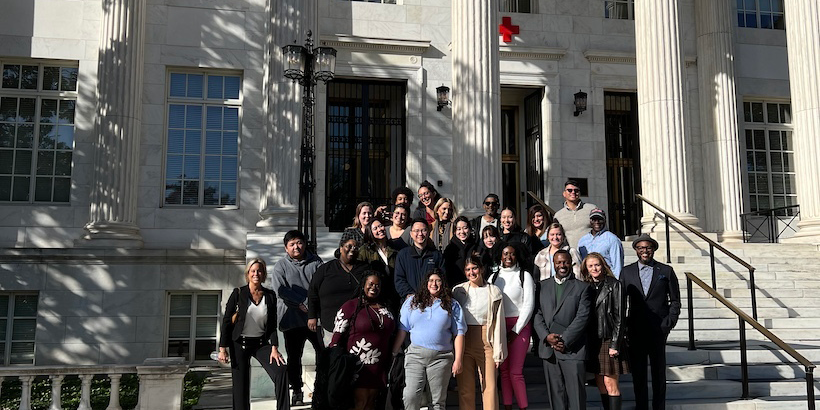
- Bi-coastal experiences in Los Angeles and Washington, DC
- Global immersion opportunities, where students work with international partners on real challenges
- Hands-on project work connected to social enterprises and community organizations
This format offers deep applied learning while remaining accessible for working adults.
Cost, Financial Aid & Scholarships
Pepperdine’s tuition is competitively priced at $1,605 per unit, totaling approximately $54,570 for 34 units.
Students may be eligible for:
- Merit-based scholarships
- Federal financial aid (for U.S. students)
- Employer tuition benefits
- Additional opportunities through GSEP
Compared with MBA programs like LMU’s, Pepperdine offers a more affordable, mission-centered degree that remains competitive with similar MA in Social Entrepreneurship programs.
Admission Requirements & Student Profile
A strong candidate for a MA in Social Entrepreneurship program typically demonstrates:
- Commitment to purpose-driven work
- Interest in nonprofit leadership, social innovation, or global development
- Desire to build ethical, community-centered leadership skills
- Readiness for applied project-based learning
Pepperdine’s application includes:
- Bachelor’s degree from a regionally accredited institution
- Statement of purpose
- Resume or CV
- Official transcripts
- Two letters of recommendation
No GRE is required.
Cohorts include working professionals, career changers, and recent graduates committed to social impact.
Competitor Comparison Table
Below are 3 competitors to compare with Pepperdine’s MA in Social Entrepreneurship & Change. For each: Program, Duration, Format / Location, Tuition / Fees, Notable Features.
| Program | Duration | Format/Location | Tuituin/Fees | Notable Features |
| Pepperdine University – MA Social Entrepreneurship & Change | 20 months | Hybrid, Bi-coastal (LA & DC) + Global Immersion | $1,605 per unit / 34 units | Hybrid format, real-world immersion, fast-pitch capstone, values-driven leadership |
| Loyola Marymount University (LMU) — MBA in Social Entrepreneurship | ~2 years | On-campus (Los Angeles) | ~ $101,000 total | Business-centered curriculum, LA entrepreneurship ecosystem |
| University of San Diego (USD) — MA in Social Innovation | 16–24 months | On-campus (San Diego) | ~ $52,000+ | Design thinking, innovation labs, community-based learning |
| American University (AU) — MA in Social Innovation | 12–18 months | Hybrid / Online (Washington, DC) | ~ $34,000 | Policy-driven orientation, strong DC nonprofit network |
Curriculum, Capstone, & Venture/Entrepreneurship Projects
Pepperdine’s curriculum bridges social innovation with leadership development and global perspective. Students gain skills in:
- Social enterprise creation
- Sustainable business models
- Impact measurement
- Organizational leadership
- Policy and advocacy
- Community engagement
The program culminates in a Fast Pitch Competition, where students present their social enterprise concepts to practitioners and leaders in the field.
Additionally, the Social Enterprise Collective event connects students to industry experts, panel discussions, and hands-on learning opportunities in both LA and DC.
Why Pepperdine MA Social Entrepreneurship Is Among the Best Choices
Pepperdine’s program stands out in several key ways compared to LMU, USD, and American University:
- Hybrid structure ideal for working professionals
- Bi-coastal experiences that expose students to social innovation and networking opportunities in two major U.S. hubs
- Global immersion for international context and applied problem-solving
- Mission-centered approach rooted in service, ethics, and community impact
- Practitioner faculty who bring real-world experience to the classroom
- Strong networks across nonprofits, social enterprises, policy organizations, and global partners
This combination makes Pepperdine’s SEC program one of the most flexible, applied, and purpose-driven options available.
Who Benefits Most from Each Program?
Pepperdine SEC: Working adults and emerging leaders seeking a hybrid, ethically focused, and globally engaged social entrepreneurship program rooted in service.
LMU: Students seeking a traditional MBA with social enterprise coursework.
USD: Students drawn to design thinking and community-based innovation.
American University: Professionals aiming to blend social innovation with public policy or international development.
ROI, Cost & Financial Considerations
Pepperdine’s hybrid MA in Social Entrepreneurship allows students to:
- Continue working throughout the program
- Apply learning directly to current professional roles
- Access a national alumni network
- Build leadership experience through hands-on projects
The return on investment includes expanded career pathways across nonprofits, social enterprises, philanthropy, education, international development, and purpose-driven corporate roles.
Frequently Asked Questions for the MA in Social Entrepreneurship
Is the GRE required?
No. Pepperdine and most peer programs do not require the GRE.
Can I work while completing Pepperdine’s MA?
Yes. The hybrid format is designed specifically for working adults.
Do hybrid programs include in-person experiences?
Pepperdine’s SEC program includes structured in-person sessions in both Los Angeles,
California and Washington, DC, plus global immersion.
How long does the program take?
The program can be completed in 20 months.
Conclusion: Pick the Program That Matches Your Impact Goal
The best MA in Social Entrepreneurship is the one that aligns with your values, lifestyle, and long-term goals.
For students seeking a flexible, experiential, purpose-driven program, Pepperdine University’s MA in Social Entrepreneurship and Change offers a distinctive blend of hybrid learning, global immersion, and ethically grounded leadership development.
Learn more about Pepperdine’s MA in Social Entrepreneurship and Change.