Pepperdine Adjunct Professor Aldrich Chan Explores the Connections Among the Brain, Human Experience, and the Natural World
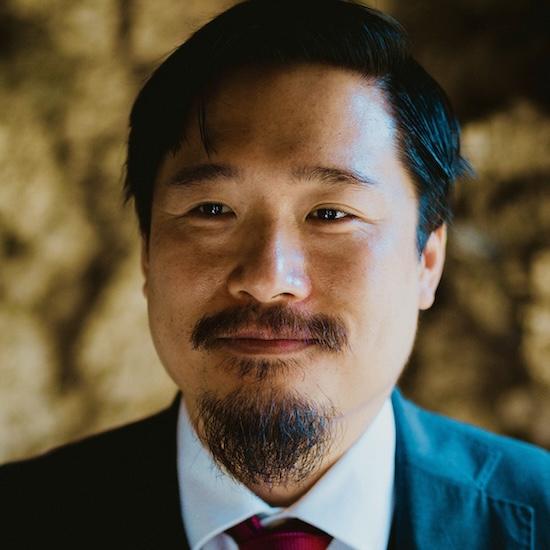
Pepperdine University adjunct professor Aldrich Chan (PsyD ’16) has built a career around a deeply human question: How can a better understanding of the brain help people live with greater awareness, well-being, and connection?
A clinical neuropsychologist, psychotherapist, researcher, and author, Chan teaches in the master’s and doctoral clinical psychology programs at Pepperdine’s Graduate School of Education and Psychology. Across his work, he brings together neuropsychology, psychotherapy, consciousness studies, and contemplative philosophy to examine how people experience and make sense of the world around them.
That interdisciplinary approach extends beyond the classroom. Chan is the founder and CEO of the Center for Neuropsychology and Consciousness in Miami, Florida, a private practice providing neuropsychological evaluations, cognitive rehabilitation, and psychotherapy. His clinical work is grounded in the brain’s capacity for change and the belief that scientific insight can help reduce suffering and improve everyday life.
Chan’s relationship with Pepperdine began as a doctoral student. After earning a bachelor’s degree from Carleton University and a master’s degree from the Chicago School of Professional Psychology, he completed his doctor of psychology degree at Pepperdine. He later returned to the University as a faculty member, bringing lessons from his research and clinical practice into the education of future mental health professionals.
His training has taken him through a range of clinical settings, including Cedars-Sinai Medical Center, Children’s Hospital Los Angeles, and Union Rescue Mission. Chan completed his APA-accredited internship at Ryder Trauma Center at Jackson Memorial Hospital and an Association of Postdoctoral Programs in Clinical Neuropsychology member fellowship at the University of Miami’s Center for Cognitive Neuroscience and Aging.
While at the University of Miami, Chan studied the relationship between trauma and the default mode network, a system of interacting brain regions associated with internally focused thought, memory, and self-reflection. His doctoral dissertation examined the impact of post-traumatic stress disorder on this network. His broader scholarship has addressed Alzheimer’s disease, memory, imagination, mindfulness, play, creativity, and psychotherapy.
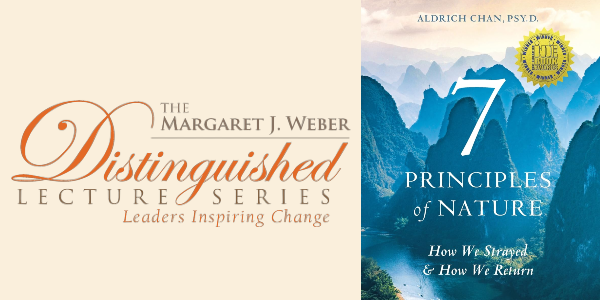
This interest in how the brain shapes reality also informs Chan’s writing. His award-winning book, Reassembling Models of Reality: Theory and Clinical Practice, explores the systems through which people organize and interpret their experiences. His more recent work, 7 Principles of Nature: How We Strayed and How We Return, considers the psychological consequences of humanity’s growing separation from the natural world.
For Chan, these areas are closely connected. His scholarship moves between the measurable processes of the brain and larger questions about meaning, consciousness, relationships, and the conditions people need to thrive. In his teaching, clinical practice, and writing, he invites others to consider not only how the mind functions but also how individuals might live in greater alignment with themselves, one another, and their surroundings.
Chan will bring these ideas to the Pepperdine community during “7 Principles of Nature: How We Strayed and How We Return” on Thursday, October 15, 2026, from 6 to 7:30 PM. The lecture will be offered at the West Los Angeles campus in room 203 and online via Zoom.
During the presentation, Chan will introduce his “SAD” theory—Separation, Alienation, and Discord—to explain three phases of human disconnection from nature. Drawing on evolutionary mismatch theory, scientific research, contemplative philosophy, and observations from modern hunter-gatherer societies, he will share seven principles intended to help people reduce stress, improve focus, and cultivate more grounded lives.
SUBSCRIBE TO THE WAVELENGTH
Pepperdine Newsroom's official newsletter for campus updates and top news.
Subscribe